
Faith as Orientation to Transcendent Truth
- lessonslearnedcoac3
- Aug 23, 2025
- 8 min read

Faith, properly understood, is not reducible to the category of belief alone, nor is it confined to the sphere of private spirituality. It is an orientation—a way of positioning oneself in relation to realities that surpass empirical confirmation and yet exert profound influence over human life. Every culture, across time and geography, has gestured toward these “ultimate concerns,” as Durkheim described them: the shared convictions and sacred ideals that bind people together, give coherence to moral order, and establish a framework for meaning. Berger, in his reflections on the sociology of religion, noted that these transcendent truths act as the canopy under which societies organize life, even when the divine or the eternal cannot be empirically verified.
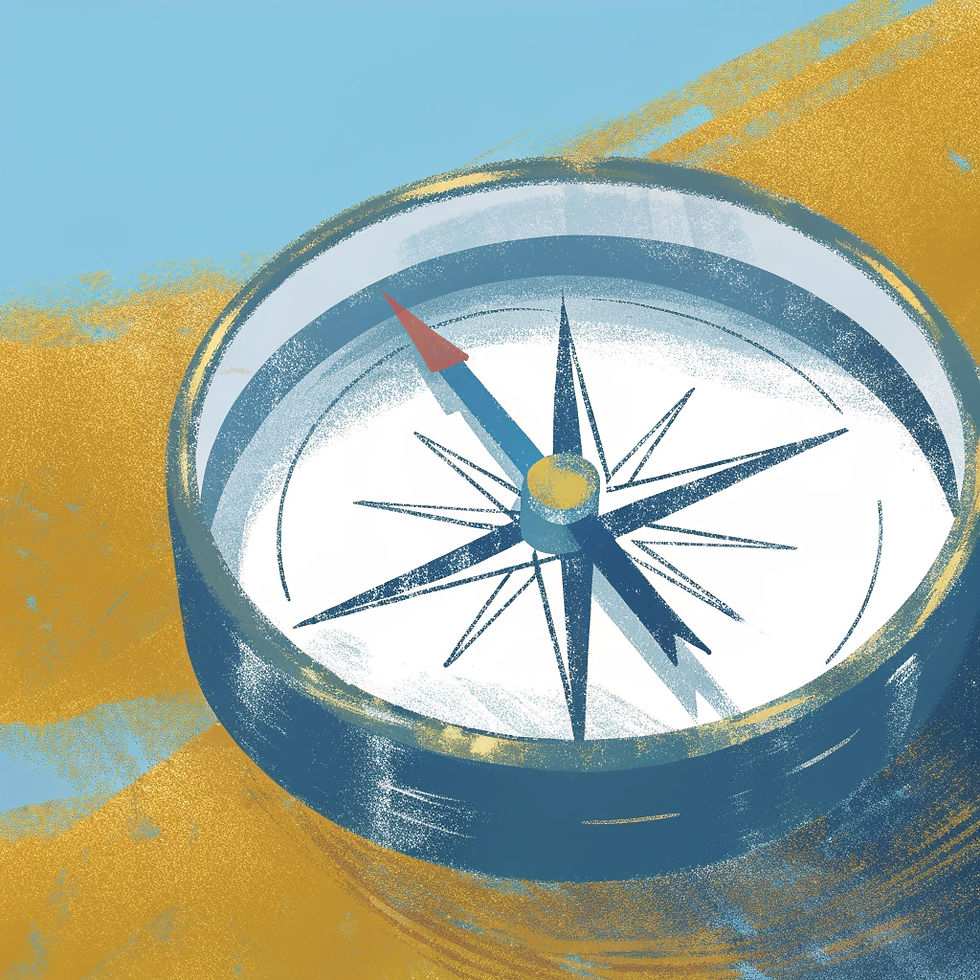
For the individual, faith operates not as a denial of reason or evidence, but as a recognition that the highest truths cannot be fully captured by them. Justice, hope, love, and God—these are not objects that can be weighed or measured, but realities that orient our lives, demanding commitment and shaping conduct. A person may “know” many things through observation and reason, but faith directs how that knowledge is ordered, prioritized, and enacted. In this sense, faith functions as both compass and horizon: it tells us which direction to move and reveals that the path extends further than we can presently see.
Such an understanding of faith guards against two common errors. The first is reducing faith to a blind leap, as though it were belief without thought or evidence. The second is attempting to collapse faith into knowledge, stripping it of its transcendent character and demanding it conform to the standards of empirical proof. Both errors miss the point. Faith is neither irrational nor measurable in the same way that knowledge is—it is a relational trust toward truths that, while not provable in the laboratory, remain undeniable in the human experience.
When leaders, seekers, and communities orient themselves in faith, they are not turning their backs on reality; they are turning toward the deeper reality that empirical tools cannot exhaust. This orientation provides resilience in uncertainty, courage in the face of suffering, and hope when knowledge reaches its limits. In this way, faith becomes not merely a personal conviction but a shared foundation upon which societies rest, guiding human beings toward transcendent truths that give life meaning, order, and direction.
Knowledge as the Foundation, Faith as the Horizon
To understand faith as an orientation to transcendent truth, it is helpful to imagine belief itself as existing on a spectrum. On one end lies belief with no grounding—unmoored opinion, assumption, or superstition. As one moves across the spectrum, belief becomes increasingly disciplined by observation, reason, and evidence, reaching the point we call knowledge. Knowledge marks the place where belief aligns with demonstrable reality, where conviction can be verified through shared methods of inquiry. Yet the spectrum does not end there. Faith stands beyond knowledge—not in opposition to it, but as its extension. Faith represents belief enacted and entrusted toward realities that surpass the boundaries of empirical proof, such as justice, hope, and the divine.
Here we can picture empiricism as a kind of bell curve resting on the spectrum, with its center of gravity positioned over knowledge. Empirical methods—testing, measurement, rational analysis—cluster most securely around what is verifiable and repeatable. They give us the strength of shared certainty, the capacity to build common understanding of what is. But by their very design, these methods cannot capture all that compels human loyalty or directs human purpose. Faith orients us beyond this midpoint on the spectrum, reaching toward truths that cannot be weighed, replicated, or quantified, yet shape life no less powerfully than knowledge itself.
Importantly, faith cannot be severed from knowledge without becoming untrustworthy. A faith that disregards empirical truth devolves into presumption, fantasy, or fanaticism. But faith refined by knowledge is neither irrational nor arbitrary. It acknowledges what is known and builds upon it, extending conviction into the territory where evidence is insufficient but commitment is still required. Faith, then, is not the abandonment of knowledge, but its fulfillment—knowledge as foundation, faith as horizon.
In this sense, faith represents not a negation of rationality, but its orientation toward ultimate concerns. Just as a sailor trusts the solidity of the ship while setting course by stars beyond his reach, so too does faith rest upon what is known while directing itself toward realities that lie beyond the measurable.
Guardrails for Trustworthy Faith
If faith is the horizon beyond knowledge, then the practical question becomes: how do we know when faith is being exercised responsibly, and when it has slipped into distortion? The spectrum of belief provides important guardrails. On one side lies belief without grounding—mere opinion, assumption, or assertion. This is where faith detaches from knowledge altogether, drifting into credulity or even fanaticism. On the other side lies the temptation to reduce all conviction to only what can be empirically verified, cutting off faith entirely. This form of hyper-skepticism leaves no room for transcendent commitments, robbing life of meaning beyond what can be measured.
Responsible faith emerges in the middle ground. It begins with knowledge—what is verifiable, what withstands rational scrutiny—and then orients beyond it toward transcendent realities. In practice, this means continually testing our faith-claims against what is already known. A faith that denies reality is self-defeating; a faith that builds on reality extends human existence toward its higher ends. For example, justice cannot be proven in a laboratory, but it can be informed by knowledge of human dignity and social order. Hope cannot be quantified, but it can be grounded in observable resilience. Even trust in God, though transcending proof, is sharpened when faith acknowledges the realities of history, community, and conscience.
This practical framework gives leaders, seekers, and communities a way to discern whether faith is healthy. The question is not simply, “Do I believe?” but “How does this belief align with what is known, and how does it responsibly carry me beyond what can be known?” In this way, faith becomes both disciplined and daring: disciplined by knowledge, daring in its reach toward transcendent truth.
The Dangers of Disordered Faith
Faith, rightly ordered, orients human beings toward transcendent truths—justice, goodness, God, meaning—that lift us beyond mere survival and into a shared pursuit of higher purpose. But faith, like any powerful orientation, can be distorted. When faith becomes untethered from knowledge or misaligned with reality, it risks collapsing into ideology, superstition, or manipulation. In such cases, faith no longer serves as a bridge between the known and the transcendent; it becomes a weapon, a shield against inquiry, or a justification for harmful action.
Sociologists such as Peter Berger warn that humans are constantly constructing “sacred canopies” to interpret the world. These systems of belief are necessary for order and meaning—but they can also be exploited. Disordered faith thrives when unquestioned convictions override the tests of knowledge, observation, and reason. It can look like blind allegiance to charismatic leaders, where loyalty replaces truth. It can manifest as rigid dogma, where any challenge is dismissed not on its merits but because it threatens the system. Or it can appear as personal denial, where an individual clings to beliefs that insulate them from confronting painful but necessary realities.
The danger is not merely intellectual; it is existential. Disordered faith makes individuals and communities fragile. When reality inevitably intrudes—when the promised certainty fails to materialize, or when contradictions pile up—the resulting disillusionment can trigger crises of faith far deeper than if the belief had been examined honestly from the start. These crises can shake identity, fracture communities, and lead to cynicism or despair.
Thus, the bridge between faith and knowledge is not optional; it is essential. Faith that honors what is known while orienting beyond it is resilient. Faith that denies or distorts what is known is brittle. The difference often determines whether a person’s spiritual journey leads to growth and perseverance—or collapse under the weight of disillusionment.
Misaligned Faith and the Signs of Crisis
Faith is never neutral. It directs how we live, what we value, and how we endure the challenges of life. When it is rightly aligned—built on a foundation of knowledge and oriented toward truths greater than ourselves—faith becomes a source of strength, clarity, and resilience. But when it is misaligned, the results are just as powerful, though in destructive ways. Misaligned faith might not present itself with fanfare; often, it shows up quietly in the daily choices that steer a person away from truth and toward false securities.
At the individual level, misaligned faith can take many forms. It can be the quiet conviction that material success guarantees meaning, or the belief that avoiding discomfort is the same as pursuing happiness. It can look like blind trust in institutions or relationships that repeatedly betray trust, or an unexamined certainty that one’s current worldview answers every possible question. In each case, the faith is real—it is enacted through action and sustained by conviction—but it is directed toward something that cannot bear the weight placed upon it.
The recognition of a crisis of faith often begins when the mismatch between conviction and reality becomes undeniable. Perhaps the “sacred canopy” of belief no longer provides shelter; its cracks show through when life’s hardships arrive. Perhaps the leader, institution, or ideology once trusted reveals corruption or emptiness. Or perhaps personal suffering makes clear that the faith one carried cannot explain, sustain, or reconcile the present reality. The individual may not always articulate this experience as a “crisis of faith”—sometimes it emerges as burnout, despair, cynicism, or even reckless searching—but at its root lies the fracture between belief and lived experience.
Crises of faith are not evidence that one has failed, nor do they always signify the collapse of faith itself. More often, they are evidence that faith, as an orientation, must be re-examined and re-ordered. Just as a compass that has been knocked off true north will misdirect a traveler, so too will misaligned faith quietly shape the trajectory of a life until the divergence becomes too wide to ignore. Recognizing the signals of this divergence—confusion, disillusionment, deep unrest—is the first step toward realignment.
Conclusion – Faith as Orientation, Realigned in Crisis
Faith, rightly understood, is not a fragile possession but an orientation—a way of directing our lives toward truths too vast to be proven, yet too vital to be ignored. It draws its strength from knowledge but moves beyond knowledge, guiding us toward meaning, purpose, and trust in what transcends the measurable. At its best, faith sustains endurance, steadies conviction, and opens a path through uncertainty.
Yet faith is not immune to distortion. When it is misaligned—directed toward false securities or insufficient foundations—it inevitably cracks under pressure. This is where crises of faith emerge: when the convictions we act upon no longer reconcile with the realities we face. Far from being a sign of failure, such crises are invitations to realign—to re-examine what deserves our trust, to re-order our commitments, and to restore faith as a living orientation toward transcendent truth.
To walk this path well is to accept that crises of faith are not interruptions in the journey, but integral waypoints. They strip away illusions, confront us with disordered attachments, and offer the chance to rebuild on foundations that endure. In this sense, faith is both tested and refined through crisis—not diminished.
At Lessons Learned Coaching, we recognize that these questions of faith, meaning, and alignment are not abstract—they are lived realities that shape decisions, relationships, and resilience. If you find yourself navigating questions of faith or wrestling with the gap between belief and experience, we would welcome the chance to walk alongside you. You can connect with us directly at lessonslearnedcoachingllc@gmail.com to begin the conversation.


Comments